

Leave the Leaves: What We Keep, What We Let Be
- nobrandresource
- 3 days ago
- 3 min read

As the garden settles into its quieter season, I’m reminded how much life is still unfolding beneath our feet. The last of the Japanese maples are letting go of their color, ornamental grasses are beginning to soften, and the perennials we’ve admired since spring are easing into their winter rest. This is the time of year when the garden asks us to slow down, look closely, and trust its quieter rhythms.
For nearly two decades I’ve followed a simple winter ritual in my own garden and in many of the landscapes we care for. It’s a practice rooted in ecology, but also in the kind of intuition that comes from walking the same paths season after season. You may have heard the phrase “leave the leaves” circulating in recent years. While it can sound like a trend, the heart of the idea is something gardeners have understood for generations: that a garden is not just a collection of plants, but a living system, full of creatures and cycles we rarely see.
In recent conversations among gardeners and ecologists, there’s been a renewed appreciation for what happens when we let fallen leaves stay where they naturally accumulate. They become shelter for overwintering insects, protection for roots, and the first step in creating the rich, crumbly soil we love. Much of the research being shared today simply confirms what many of us have witnessed firsthand that gardens are healthier and more resilient when we’re thoughtful about how much we tidy and how much we gently leave alone.
My Winter Shortcut
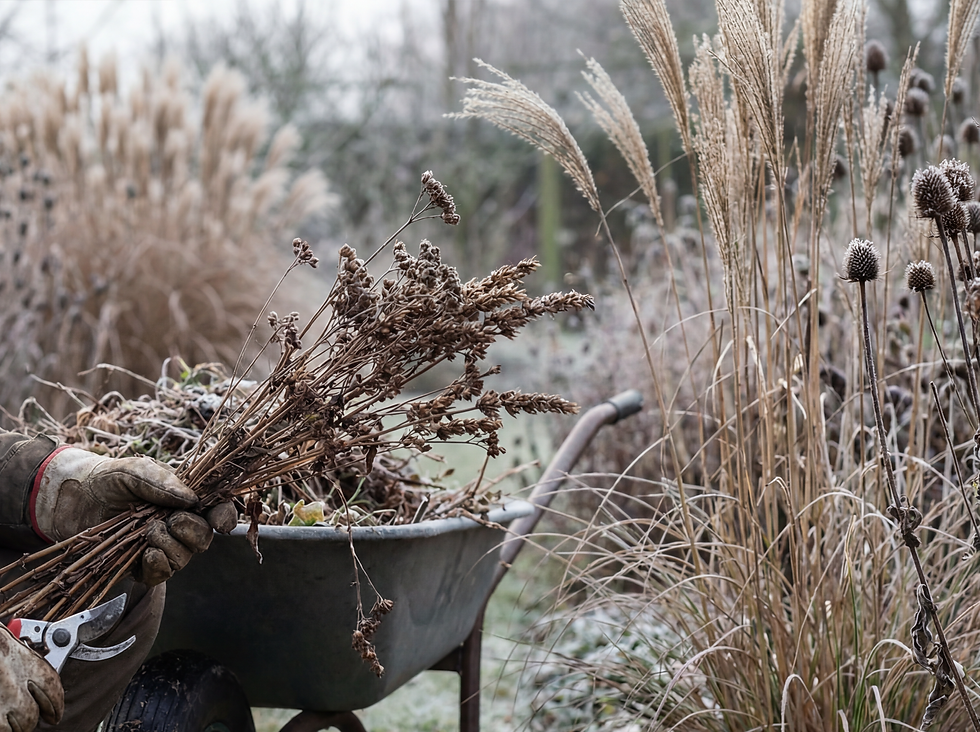
When I prepare a garden for winter, I keep things beautifully simple. I move through the space slowly, assessing plant by plant not with a checklist, but with an eye for what truly needs attention.
Some perennials soften and fold into themselves once the cold settles in. Those come out.
Others stand gracefully all winter long. I leave them, knowing their stems feed birds and their bases shelter countless insects.
Lawns and hardscape areas, however, stay clear. Leaves can mat down on grass or make walkways slick, so I gather them and return them to the planting beds where they can do some good. Under trees, especially, a loose, natural layer never too thick mimics the forest floor these ecosystems evolved to expect.
Once the leaves are settled into their winter home, I add a light dusting of compost and a gentle, time-release organic fertilizer. Not to force growth, winter is for resting but to quietly feed the soil so that, come spring, the garden wakes up with everything it needs. The compost also helps weigh down the leaves so they don’t wander back onto the lawn with the first gust of wind.
After that, nature takes over.
Winter rains begin the slow work of breaking everything down.
Microorganisms stir.
Insects settle deeper into their shelters.
And the garden holds its breath until the first warm days of spring.
Why This Matters

Leaving a little more softness in our winter gardens supports an incredible amount of unseen life. Butterflies, moths, beetles, spiders, pollinators, birds. So many of them depend on these small pockets of habitat. And year after year, I see the difference: richer soil, sturdier perennials, and gardens that feel more alive, even in their quietest months.
Mostly, though, this approach invites a shift in how we see our landscapes. Winter cleanup becomes less about erasing the season and more about caring for what’s already there, trusting that the garden knows what to do, and that our role is simply to support its natural processes with a lighter hand.
As we move deeper into the colder months, I hope you’ll find the same comfort in these small rituals. The garden may look still, but it’s busy preparing for the beauty to come. And sometimes the best thing we can do is step back, soften our approach, and let the season do its quiet work.
Sources and Further Listening
If you’d like to explore some of the conversations and research that inform this approach, here are a few pieces I’ve found especially thoughtful:
A recent A Way to Garden podcast episode with entomologist Max Ferlauto on the impacts of fall leaf cleanup.
Margaret Roach’s companion article, “Calculating the Impact of Leaving the Leaves.”
Research by Max Ferlauto and Karin Burghardt on how removing leaves affects spring-emerging insects.
These offer a deeper look at why a gentler winter cleanup supports such a vibrant web of life in our gardens. Source: A Way to Garden | Margaret Roach Leaf Removal’s Impact with Max Ferlauto

Comments